

How to Choose Electrical Tape That Actually Holds Up
Cheap electrical tape does not fail on the shelf. It fails at the splice, weeks later, when the wrap loosens, the edge lifts, or the insulation thins out where it was stretched too hard. By then the panel is closed and nobody is watching.
Choosing electrical tape that actually holds up is not about grabbing the thickest roll. It is about five checks that take two minutes and prevent most failures: thickness and backing, adhesive type, temperature range, dielectric rating and listing, and the right width and stretch for the job.
Start here: Shop Black Electrical Tape Standard Grade ETB7XX | Request a free sample
What "Holds Up" Actually Means
A tape that holds up does three things over time. It stays sealed, with no flagging edges or unwinding. It keeps insulating, with no thin spots where the film was overstretched. And it survives the environment, heat in a panel, cold in a warehouse, and years of vibration without turning gummy or brittle.
Our ETB7XX Black Electrical Tape, Standard Grade is built for exactly that: a 7 mil plasticized PVC film with a rubber resin adhesive, rated 14 oz per inch adhesion, 16 lb per inch tensile strength, and 200 percent elongation. It carries a 6KV dielectric breakdown rating and is UL Listed. Application temperature is 32F to 122F, and service temperature is 14F to 176F.
The 5 Checks Before You Buy
Check 1: Thickness and Backing
ETB7XX is 7 mils, the standard general-purpose thickness. Our ETB866 Premium Grade is 8 mils for extra durability and insulation strength. Thicker is not automatically better. Thicker tape is stiffer, so it conforms less easily around tight bundles and small splices. Choose 7 mil for everyday wire work and 8 mil when you want maximum abrasion resistance and all-weather durability.
Check 2: Adhesive Type
Both ETB7XX and ETB866 use a rubber-based adhesive. Rubber resin grabs fast and holds on uneven surfaces, which is what you want when wrapping a splice by hand in the field. It gives reliable bonding and flexibility without a long wait for the bond to build.
Check 3: Temperature Range, Two Numbers Not One
There are two temperatures that matter, and they are different. Application temperature is the range where you can install the tape: 32F to 122F for ETB7XX. Service temperature is the range it handles once installed: 14F to 176F. Wrapping a splice in a freezing warehouse below the application range is a classic way to get a wrap that looks fine on day one and lifts by spring.
Check 4: Dielectric Rating and Listing
For real electrical work, look for a dielectric breakdown rating and a listing. ETB7XX is rated 6KV dielectric breakdown and is UL Listed. ETB866 matches the 6KV rating and adds CSA listing. If the job involves panels, splices, or anything an inspector will see, a listed tape is not optional.
Check 5: Width, Length, and Stretch
Match the width to the bundle. ETB7XX comes in widths from 3/8 inch to 4 inches, plus a full 49 inch log, in 66 ft or 108 ft lengths. ETB866 comes in 3/8 inch to 4 inches plus a 49 inch log, in 60 ft lengths per the product page. Use the 200 percent elongation to conform the tape around the splice, but do not stretch it until the film goes thin. Overstretched tape loses insulation thickness exactly where you need it most.
 Shop ETB7XX Black Electrical Tape
ETB7XX vs ETB866: Quick Comparison
| Spec | ETB7XX Standard | ETB866 Premium |
|---|---|---|
| Thickness | 7 mil PVC | 8 mil PVC |
| Adhesive | Rubber resin | Rubber based |
| Adhesion to steel | 14 oz/in | 14 oz/in |
| Tensile strength | 16 lb/in | 16 lb/in |
| Elongation | 200% | 200% |
| Application temp | 32F to 122F | 32F to 122F |
| Service temp | 14F to 176F | 14F to 176F |
| Dielectric | 6KV | 6KV |
| Listing | UL Listed | UL/CSA Listed |
| Best for | Everyday wire insulation and bundling | Demanding, all-weather, extra durability |
Shop them: Shop ETB7XX | Shop ETB866 Premium
5 Mistakes That Make Electrical Tape Fail
1. Using the Wrong Tape for Electrical Work
Duct tape, painter's tape, and packaging tape are not electrical tape. They have no dielectric rating and no listing, and their adhesives are not made for this job. If it carries current or an inspector will see it, use a listed electrical tape.
2. Stretching the Tape Until It Goes Thin
A little stretch helps the tape conform. Too much stretch thins the PVC film and cuts insulation right at the splice. Wrap snug, not strained. If the tape turns translucent as you pull, back off.
3. Loose Wraps With Gaps
Spiral wraps should overlap by half the tape width, with no gaps and no loose tails. Gaps expose the splice to moisture and air, and loose tails are where unwinding starts.
4. Wrapping in the Cold
Below the 32F application range, the adhesive does not wet out properly. The wrap looks fine indoors and lifts once the equipment runs. Warm the tape and the work area when you can, or wait for conditions inside the range.
5. Skipping a Listed Tape on Panel Work
For panels, splices, and phase identification that must meet code, the UL listing on ETB7XX and the UL/CSA listing on ETB866 matter. Saving a dollar with an unlisted tape is the most expensive savings in electrical work.

How to Wrap a Splice That Lasts
You do not need a certification course for a basic splice wrap, but the sequence matters:
- Start the wrap on the insulation, not on the bare splice, so the tape anchors to a clean surface
- Keep light, even tension as you spiral, overlapping each turn by half the width
- Cover the full splice plus extra insulation on both sides
- Finish back on insulation and press the end down firmly, with no tail lifting
- Check the wrap: no gaps, no thin translucent spots, no loose end
For phase and circuit identification, ETB7XX also works for color marking on top of a proper insulating wrap. Check your local code for identification requirements.
Try It First: Request a Free Sample
Want to feel the tape before you stock up? Request a free sample and test it on your actual wire and conditions.
Go to Request A FREE Sample, enter the SKU of the product you want to test, add it to cart, and check out. Samples are free, but shipping is not included. Samples are for testing purposes, up to 4 inches wide and about 10 to 15 feet long.
Get started: Request your free sample here
Questions? Talk to Our Team
Learn more about Tape Providers, check our FAQ and shipping information, or contact us for help choosing electrical tape for your job. You can also reach us on our contact page. Buying in volume? See full pallet ordering.
Final Thoughts
Electrical tape holds up when you match the tape to the job: the right thickness, a rubber adhesive that grabs, a temperature range that covers both install day and service life, and a dielectric rating with a listing behind it. ETB7XX covers everyday work. ETB866 steps up when the environment is demanding.
Wrap it right, half-lap, no gaps, no overstretch, and it will still be sealed when you open that panel years from now.
If you are unsure which electrical tape fits your application, our team can help you pick the right option.
Contact Tape Providers for product recommendations and technical support.
Ready to start? Shop ETB7XX Electrical Tape | Shop ETB866 Premium | Request a free sample
Product Catalog
-
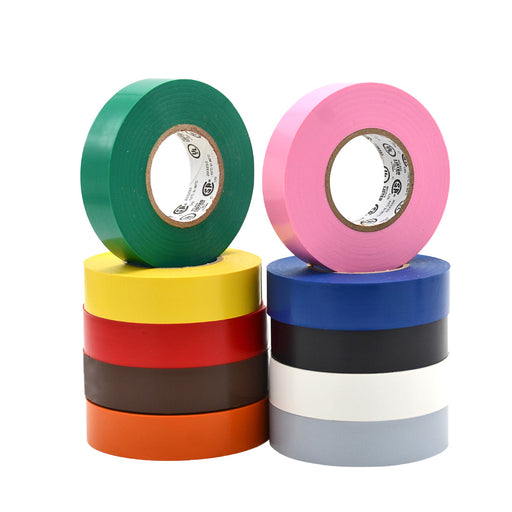 Original price $1.80 - Original price $401.70Original price $1.80 - Original price $401.70Original price $1.80As low as: $1.40$1.40 - $321.39Current price $1.40
Colored Electrical Tape - Standard Grade - 66 feet | ETC766MS
STANDARD GRADE ELECTRICAL TAPE Alternative to: Various industry standards such as Uline S-24477, S-17841, S-17842...
View full details -
 Original price $21.99 - Original price $579.99Original price $21.99 - Original price $579.99Original price $21.99As low as: $11.45$11.45 - $452.96Current price $11.45
Anti Slip Grip Tape 20 Yards | AST32
ANTI-SLIP GRIP TAPE Alternative to: Various industry standards such as Uline S-14682, S-17181, S-15798, 3M Safety ...
View full details -
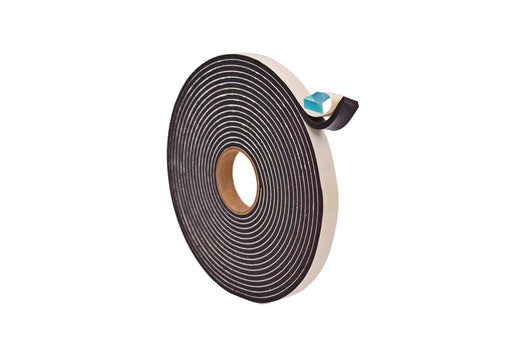 Original price $3.89 - Original price $627.20Original price $3.89 - Original price $627.20Original price $222.40As low as: $3.89$3.89 - $487.33Current price $3.89
Black PVC Foam Weather Stripping Tape | SSLDFT (Made in USA)
BLACK PVC FOAM STRIPPING TAPE Alternative to: Various industry standards such as Uline S-3791, S-10530, S-3792, S-1...
View full details -
 Original price $1.28 - Original price $209.45Original priceAs low as: $1.28$1.28 - $209.45Current price $1.28
5 Mil Vinyl Pinstripe Floor-Marking Tape - 36 yards | VTC365
VINYL PINSTRIPE FLOOR-MARKING TAPE Alternative to: Various industry standards such as Uline S-23886, S-23887, S-238...
View full details -
 Original price $4.80 - Original price $795.83Original priceAs low as: $4.80$4.80 - $795.83Current price $4.80
Engineering Grade Reflective Tape - 10 yards | RTC7
ENGINEERING GRADE REFLECTIVE TAPE Alternative to: Various industry standards such as Uline S-15789, S-6730, S-1579...
View full details -
 Original price $1.66 - Original price $601.04Original priceAs low as: $1.66$1.66 - $601.04Current price $1.66
Metalized Polyester Mylar Film Tape | MPFT1 (72 yd)
METALIZED TAPE - SHINY POLYESTER MYLAR FILM TAPE Alternative to: Various industry standards such as Uline 15881, 17...
View full details -
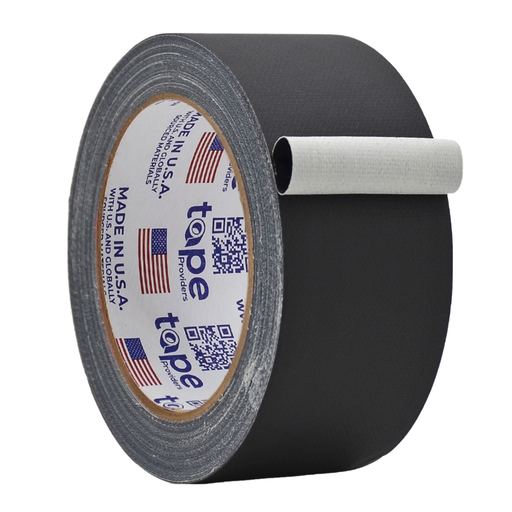 Original price $11.87 - Original price $446.40Original price $11.87 - Original price $446.40Original price $11.87As low as: $4.07$4.07 - $338.00Current price $4.07
Standard Grade - Colored Gaffer Tape - 60 FT | GTC12
STANDARD GRADE GAFFER TAPE Alternative to: Various industry standards such as Uline S-21257, S-21258, and more St...
View full details -
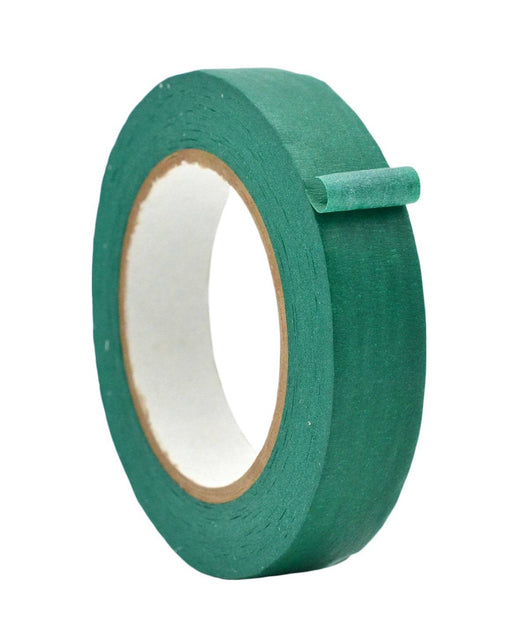 Original price $1.70 - Original price $254.26Original priceAs low as: $1.70$1.70 - $254.26Current price $1.70
Colored Masking Tape - All Purpose | MTC5 (Made in USA)
MTC5 COLORED MASKING TAPE Alternative to: Various industry standards such as Uline S-7161, S-15894, S-2489, S-2490,...
View full details -
 Original price $1.77 - Original price $151.77Original priceAs low as: $1.77$1.77 - $151.77Current price $1.77
Bi-Directional Filament Tape | BFST47
BI-DIRECTIONAL FILAMENT TAPE Alternative to: Various industry standards such as 3M 8959; IPG 745; Cantech 190; Sica...
View full details -
 Original price $259.45Original price $13.23 - Original price $259.45Original price $259.45As low as: $13.23$13.23 - $244.17Current price $13.23
Matte Black Aluminum Foil Tape With Liner | AFTB20A (2 Mil, 27 yd)
PREMIUM GRADE BLACK MATTE ALUMINUM FOIL TAPE WITH LINER Key Features: Matte Black Finish: Non-reflective, absorbs l...
View full details


Leave a comment